
Rebuilt vs. Remanufactured Transmissions: What's the Difference?
-
Understanding Your Transmission Replacement Options
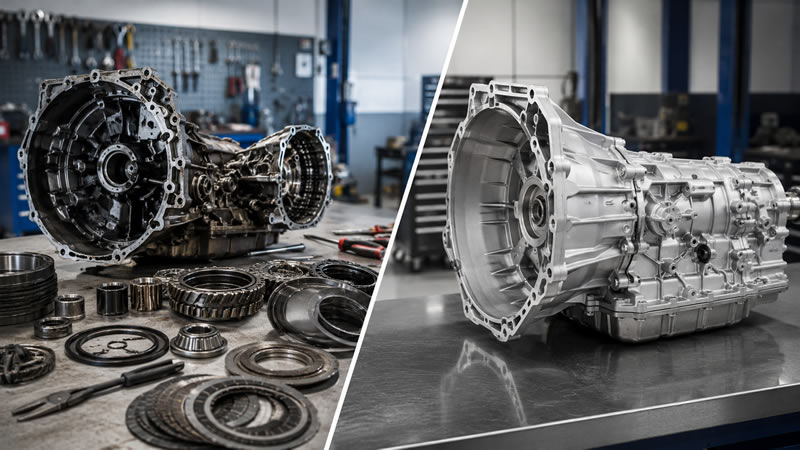
When a transmission develops a serious internal problem, repairing the vehicle may involve more than replacing a single component. Depending on the condition of the transmission, the vehicle, and the type of failure, you may hear terms such as rebuilt transmission and remanufactured transmission.
Although these terms are sometimes used interchangeably, they generally describe two different approaches to restoring a transmission. Understanding the difference can help you make a more informed decision when discussing transmission repair or replacement options.
What Is a Rebuilt Transmission?
A rebuilt transmission is typically the vehicle's existing transmission, or a similar used transmission, that has been removed and disassembled so its internal components can be inspected. Worn, damaged, or failed parts are repaired or replaced before the unit is reassembled and installed.
The scope of a rebuild can vary depending on the transmission, the extent of the damage, and the repair facility performing the work. Some components may still be serviceable and reused, while other parts may need to be replaced or resurfaced.
A Typical Transmission Rebuild May Include:
- Removing the transmission from the vehicle
- Disassembling the transmission and inspecting internal components
- Identifying worn, damaged, or failed parts
- Replacing or repairing components as needed
- Cleaning and preparing reusable components
- Reassembling the transmission
- Reinstalling the transmission and verifying proper operation
What Is a Remanufactured Transmission?
A remanufactured transmission, often called a reman transmission, generally goes through a more comprehensive restoration process. The transmission is completely disassembled, thoroughly cleaned, carefully inspected, and rebuilt using a defined remanufacturing process.
Rather than addressing only the components that have already failed, remanufacturing is intended to restore the entire unit to a consistent operating standard. Depending on the remanufacturer and transmission model, the process may also include updated or improved components designed to address known wear points or common failure areas.
A Remanufacturing Process Commonly Includes:
- Complete disassembly of the transmission
- Thorough cleaning of the case and internal components
- Detailed inspection of individual parts
- Replacement or resurfacing of worn components
- Installation of required seals, gaskets, friction materials, and other service components
- Reassembly according to the specifications established for that transmission
- Testing of the completed transmission before installation or shipment
Rebuilt vs. Remanufactured: The Main Difference
The biggest difference is generally the scope and consistency of the restoration process. A rebuilt transmission is repaired by disassembling the unit and addressing worn or damaged components. A remanufactured transmission is typically restored through a more standardized process in which the complete unit is evaluated, renewed, reassembled, and tested.
Modern automatic transmissions are increasingly complex. Electronic controls, hydraulic systems, valve bodies, solenoids, torque converters, sensors, and precision internal components all work together. Because of this complexity, specialized equipment, technical knowledge, and proper testing can be extremely important when restoring a transmission.
Why Testing Matters
A transmission can look correct internally and still have an operating problem that only becomes apparent under load. For this reason, testing is an important part of a high-quality transmission restoration process.
Remanufactured units may be tested using specialized equipment designed to evaluate operation before the transmission is installed in a vehicle. This can help identify problems with hydraulic pressure, shifting, engagement, or other operating characteristics before the unit is placed into service.
Which Option Is Right for Your Vehicle?
There is no single answer that applies to every transmission problem. The right choice depends on factors such as the type of transmission, the extent of the internal damage, parts availability, vehicle mileage, overall vehicle condition, cost, and the quality of the rebuilt or remanufactured unit being considered.
Before replacing a transmission, a proper diagnosis is essential. Some symptoms that appear to indicate complete transmission failure can sometimes be caused by electrical problems, sensors, solenoids, valve-body issues, fluid-related problems, or other components that may be repairable without replacing the entire transmission.
Questions to Ask Before Choosing a Transmission
- Has the vehicle been properly diagnosed before replacement is recommended?
- What components are replaced during the rebuild or remanufacturing process?
- Is the torque converter included or replaced?
- Is the transmission tested before installation?
- Are known updates or improved components included when applicable?
- What warranty is provided with the transmission?
- What installation procedures or additional components are required?
Talk to a Transmission Specialist
If your vehicle is slipping, shifting harshly, hesitating to engage, making unusual noises, leaking transmission fluid, or displaying a transmission-related warning light, the first step should be an accurate diagnosis.
At Ace Transmission & Automotive, we can evaluate your vehicle's transmission and explain the repair or replacement options that make sense for your specific situation. Our goal is to help you understand the condition of your transmission and make an informed decision before moving forward with repairs.
Have questions about a rebuilt or remanufactured transmission? Call Ace Transmission & Automotive at 970-613-9100 to schedule a transmission inspection or diagnostic service.
-
You Can Count On Ace Transmission & Automotive
- Services Autos, Trucks & Motorcycles
- Foreign & Domestic Makes & Models
- Automatic & Manual Transmissions
- CVT Transmission Specialists
- Great Customer Services
- Highly Trained Technicians
- Professional Services - Affordable Rates
- Locally Owned & Operated
- Custom Rebuilding
- In Business Since 2000
Our Services
Loveland, CO Auto Repair & Transmission Services
-
- Transmission Service & Repair
- Auto Repair
- Air Conditioning
- Alternators & Starters
- Anti-Lock Brakes
- Batteries
- Belts & Hoses
- Brakes & Rotors
- Cabin Air Filters
-
- Clutch Service & Repair
- Custom Rebuilding
- Diagnostics Testing
- Exhaust System & Mufflers
- Fuel System
- Heating & Cooling Systems
- High Performance Upgrades
- Oil Changes & Lube
- Power Train Repair
-
- Routine Servicing
- Steering & Suspension
- Transfer Case
- CVT Transmission Repair
- Transmission Inspecting
- Transmission Rebuilds
- Transmission Services
- Water Pumps & Radiators
- And Much More!
NEED HELP NOW?
Fill out the form below and we will contact you as soon as possible!
-
Service Area
-
Business Hours
Today CLOSED
Monday - Friday 8:30 AM - 5:30 PM
Weekends CLOSED -
We Accept
-
Find Us On





© Ace Transmission & AutomotiveAll Rights Reserved. Powered by: Local Internet